6 Common Brake Noises That Signal It’s Time For Service

Is Your Volkswagen Alternator Failing? 7 Warning Signs
October 3, 2026
Mercedes-Benz C Service Checklist For Long-Term Vehicle Health
October 15, 2026
Quick Summary
Six brake sounds deserve attention: high-pitched squealing, grinding, scraping, clicking or clunking, rattling, and a low-speed chirp or squeak. Squealing is often the first notice that pads are wearing, while grinding and scraping suggest the damage has progressed to metal contact, which raises both risk and repair cost. Some light noise can be harmless, but only an inspection can tell the difference, and any difference in pedal feel, pulling, or a dash warning makes it more urgent.
So your brakes made a new noise this morning, maybe on the way to work or at a light in Harvey. Now you’re wondering if it’s a big deal or if it will go away. Nobody pulls in here and says “my pad wear indicator is touching the rotor.” It’s always “it sounds weird,” and that’s fine, because our technicians can work with weird.

Here are six common brake noises and what they usually mean on a Mercedes-Benz, a BMW, a Porsche, or whatever German car you have. We also cover when we would say don’t wait, and when our brake repair team should see the car first.
1. High-Pitched Squealing
Most people hear that thin squeal first, as you ease up to a stop. Plenty of German cars have a little wear tab or an electronic sensor in the pads. It squeals or sends a message before the lining is all gone, so it is the car doing its job.
Glazed pads or a damp morning can cause it too. If it comes back every day, though, get it looked at. The Car Care Council lists squealing among the signs that your brakes need attention.
2. Grinding
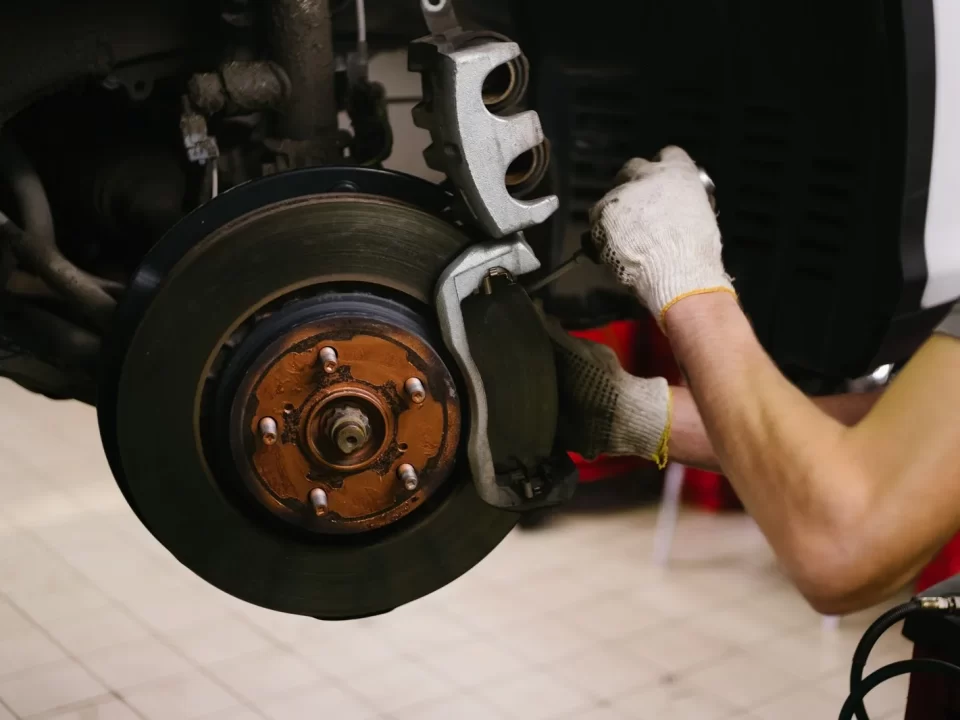
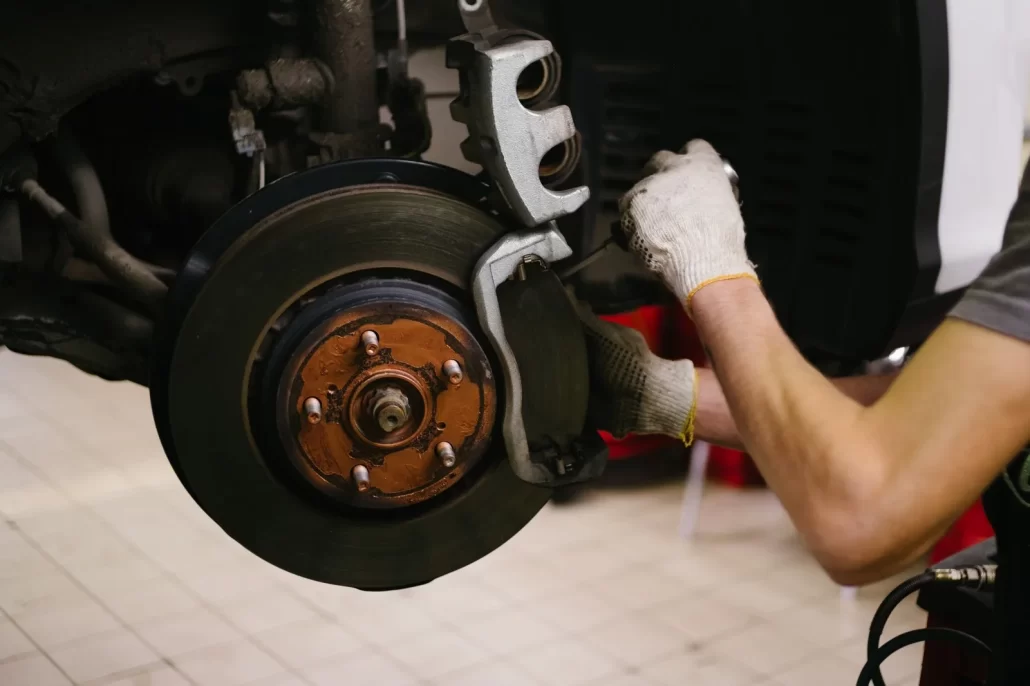
Grinding is lower and rougher, and you feel it in the pedal. The pad material is gone, and it is metal on metal, with the steel backing plate chewing up the rotor on every stop.
The council also says not to let brakes get to the metal-to-metal point, because it is a safety hazard and a bigger repair bill. We agree. Pull over somewhere safe and call us, and don’t drive it any further than you have to.
3. Scraping Or Metallic Rubbing
Scraping or metallic rubbing that follows wheel speed instead of the pedal could come from a bent dust shield, a rotor with a rough edge, or a stone stuck behind the caliper. Sometimes it keeps going when you’re not even braking.
You can’t tell which one it is from the driver’s seat. We find out on the lift, because the cause you guess wrong on is the one that comes back to cost you.
4. Clicking Or Clunking
You might hear one click when you first press the pedal, or a clunk going from drive to reverse in the driveway. Something that should be tight is moving. It could be a worn clip, a loose caliper bracket, or a tired bushing nearby.
Whether it’s the brakes, the suspension, or both, we check the mounting hardware and the parts around it together. Our auto suspension service handles the suspension side if that is where the noise lives.
5. Rattling
Rattles over bumps, with the brakes on or off, usually come from loose or worn hardware around the wheel. Because it comes and goes, people live with it and say the car is just getting old.
We wouldn’t. Something isn’t being held where it belongs, and loose brake parts wear unevenly, so it costs more the longer you wait.
6. A Low-Speed Chirp Or Squeak
A chirp at parking-lot speed that is gone the second you press the pedal can be a pad barely touching the rotor or a spot on the rotor surface. Humid weather around here, or damp brakes after a rainy night, can do it too.
We can’t say which one without looking. If it is still chirping after a few dry days, come in and let us check it.
Signs That Make A Noise More Urgent
When there is noise plus something else, it’s a bigger deal. The council also mentions the car pulling to one side, a pedal softer or harder than normal, vibration in the pedal or steering wheel, and a brake warning light.
Lots of German cars have electronic pad wear sensors, and they put a message on the dash. Treat that like an appointment the car made for you, because waiting a few more weeks has never made a pad any thicker.
Why A Specialist Inspection Matters
How fast brakes wear depends on how you drive, where you drive, and what you drive. So we check the lining thickness, the brake fluid, the rotor thickness, the hoses, and the warning light, which is pretty much the list the Car Care Council describes.
Our owner, Chuck Prieur, has over 40 years of experience with German automobiles. Our repairs and services match or exceed factory standards, and we guarantee it. If the brake check turns up something outside the brakes, our diagnostic work can follow it up, and our auto repair team can take it from there.
If your Mercedes-Benz, BMW, Porsche, Volkswagen, Audi, or MINI is making any of these sounds, we can help. Mercedes owners can also see when to schedule a Mercedes brake service. Brake service starts with a careful inspection, and we protect your interior and exterior the whole time the car is in our shop. You can see everything we handle on our services page.
A little squeal checked early is a much smaller job than a grinding one checked a month later.
FAQs
Is it safe to drive with squealing brakes?
Usually it is an early warning and not an emergency, but a squealing pad is a pad that is running low, so get it inspected soon. Stop driving the car if the pedal starts to feel different under your foot or the noise turns rougher.
Why are my brakes grinding?
Most often the pad lining has worn away and metal is meeting metal at the rotor. Driving on it scores the rotors and cuts stopping power, so leave the car parked and call us, because replacing pads early costs far less than replacing rotors too.
Can wet weather cause brake noise?
Yes, it can. Moisture leaves a thin film on the rotors that usually wears off within a few stops, and Louisiana humidity makes that common. If the noise is still there once the brakes are warm, have us check whether it is harmless or wear.
How often should brakes be inspected?
Brakes should be checked at least once a year, according to the Car Care Council, though your driving habits, the roads, and the car itself can shift that schedule. A new noise or a dash warning means come in sooner, and we will go over the whole system and tell you what we find.
Call (504) 368-1272 to check availability with German Auto Repair.
Mercedes-Benz, BMW, Porsche, Volkswagen, Audi, and MINI are trademarks of their respective owners. German Auto Repair is an independent shop and is not affiliated with any of these manufacturers.